
The Orange Revolution
In November 2004, Ukraine's election authorities declared Viktor Yanukovych the next president. Hundreds of thousands of Ukrainians believed the result had been stolen, filled central Kyiv in orange, and demanded something both modest and transformative: count their votes honestly.
The Two Viktors
Viktor Yushchenko, a former prime minister and central banker, campaigned on democratic reform, closer European ties, and limiting the power of corrupt political networks. Orange became his campaign's color.
Viktor Yanukovych was the serving prime minister and drew his strongest support from the industrial east and south. He promised stability and close relations with Russia while benefiting from the state machinery and President Leonid Kuchma's endorsement.
The choice was not a clean geographic split between “pro-Western” and “pro-Russian” Ukrainians. Both candidates sought votes nationwide, and domestic concerns—corruption, wages, media freedom, and the conduct of government—were central.

- Traces Ukraine from its earliest history through the modern independent state
- Explains why Kyiv stands at the center of the Eastern European story
- A strong foundation for understanding Ukrainian identity, borders, and politics
A Runoff Marred by Fraud
Neither candidate won a majority in the first round, so a runoff took place on November 21. The Central Election Commission announced that Yanukovych had defeated Yushchenko, 49.46 percent to 46.61 percent.
Observers documented intimidation, misuse of state resources, biased media, suspicious absentee voting, and implausible turnout in Yanukovych strongholds. The OSCE election mission's final report concluded that the runoff failed to meet a considerable number of democratic standards.
Parallel counts and exit polls pointed toward a Yushchenko victory. For many Ukrainians, the announced result looked less like an ordinary electoral dispute than an attempt to remove their ability to change the government peacefully.
Maidan Turns Orange
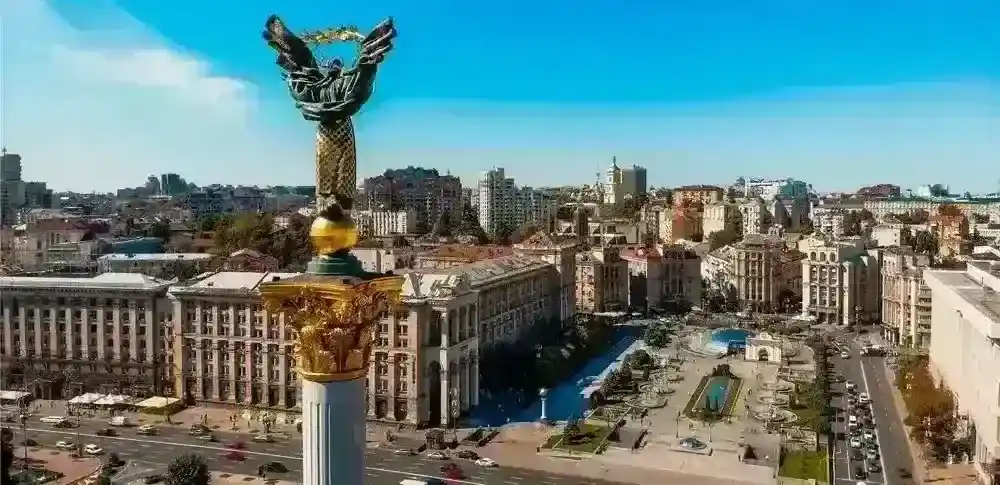
Protesters gathered on Kyiv's Independence Square—Maidan Nezalezhnosti—before the official result was complete. The crowd grew into a vast, disciplined encampment supported by rallies, strikes, regional councils, civic groups, students, musicians, and opposition parties.
Despite bitter rhetoric and fears of a crackdown, the movement remained overwhelmingly peaceful. Government institutions also divided: some diplomats, local officials, journalists, and security officers rejected the declared result or refused unlawful orders.
Supporters kept the camp supplied with food, warm clothing, tents, and stages through weeks of freezing weather. Orange rallies spread to other cities, while Yanukovych supporters held their own demonstrations and officials in some eastern regions threatened autonomy, exposing real political divisions without turning them into a civil war.
International mediation helped keep negotiations open, but the decisive pressure came from Ukrainians defending the meaning of their own election. The protests did not install Yushchenko directly; they demanded a lawful remedy.
The Court Orders a New Vote
On December 3, Ukraine's Supreme Court ruled that systemic violations made it impossible to establish the voters' true will. It annulled the runoff result and ordered the second round to be repeated under strengthened safeguards.
The repeat vote on December 26 was much cleaner. Yushchenko won with about 52 percent to Yanukovych's 44 percent, and independent observers judged that it moved substantially closer to international standards.
This institutional ending is crucial. Ukraine's court applied election law, parliament changed procedures to reduce abuse, election officials conducted another ballot, and the losing side challenged the outcome through legal channels.
Yanukovych did not disappear from politics. He led the opposition, his party won the largest share in the 2006 parliamentary election, and he returned as prime minister before later winning the presidency in 2010.
Why Russia Watched Closely
President Vladimir Putin openly favored Yanukovych and congratulated him before the disputed count was settled. Moscow portrayed the protests as foreign interference, while Western governments and organizations supported monitoring, civil society, and a fair vote.
Foreign influence existed on all sides, but it does not explain away the scale or agency of Ukrainian participation. The Orange Revolution was a civic response to visible domestic fraud, not a seizure of power by another state.
Yushchenko's presidency later disappointed many supporters amid infighting and slow reform. Even so, 2004 established that citizens and institutions could block a falsified transfer of power.
The struggle over Ukraine's direction continued through less visible forms of leverage. Russia and Ukraine's repeated gas disputes in 2006 and 2009 showed how commercial dependence could become geopolitical pressure.

- Condenses centuries of Ukrainian history into an approachable single volume
- Useful context for Kyiv's monuments, museums, and national symbols
- A manageable starting point before moving into more specialized histories
Continue with the next article in the sequence:
Return to the chronological outline to browse all chapters.