
February 2014: The Fall of Yanukovych and the Road to Crimea
Ukraine's government did not change in February 2014 through one neat constitutional procedure. It changed amid lethal street fighting, the collapse of presidential authority, Viktor Yanukovych's flight from Kyiv, and emergency votes by a parliament that still included many members of his former majority.
The Deadliest Days on Maidan
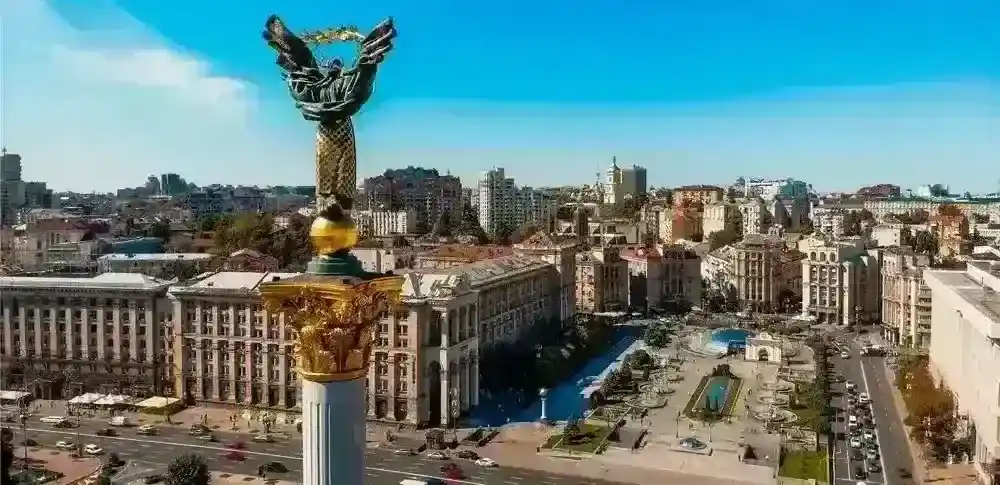
On February 18, protesters marched toward parliament as deputies considered restoring limits on presidential power. Clashes spread through central Kyiv, police pushed toward Maidan that night, and fires consumed the Trade Unions Building and parts of the protest camp.
On February 20, gunfire killed large numbers of protesters along Instytutska Street; law-enforcement officers were also shot and killed during the wider confrontation. Across the January and February violence, more than 100 people died, most of them protesters.
Who ordered, enabled, or carried out every shooting remains the subject of criminal cases, disputed evidence, and competing claims. A responsible account does not need to settle unresolved questions to recognize that protesters and police were killed and the government's command structure was coming apart.

- Introduces Ukraine through the faces and stories of its people
- Offers visual context for the country beyond breaking-news imagery
- A substantial gift for readers drawn to contemporary Ukrainian life
The February 21 Agreement
With European foreign ministers mediating and a Russian representative present for talks, Yanukovych and three opposition leaders signed an agreement on February 21. It called for a return to the 2004 constitution, a national unity government, constitutional reform, and an early presidential election no later than December.
Parliament began implementing key parts of the compromise, including restoring the earlier constitution and changing the interior ministry's leadership. Police withdrew from central positions, and protesters gained access to government districts.
The agreement did not hold. Many on Maidan rejected waiting months for an election after the killings, state authority was disintegrating, and Yanukovych left Kyiv that evening for eastern Ukraine without announcing a lawful transfer of presidential duties.
Yanukovych Leaves and Parliament Acts
By the morning of February 22, the presidential compound and central government buildings stood largely unguarded. Yanukovych appeared in a televised interview from Kharkiv, said he would not resign, called events a coup, and continued moving before eventually reaching Russia.
That day, 328 of parliament's 450 members voted that Yanukovych had withdrawn from performing his constitutional duties and scheduled an early presidential election for May 25. The parliamentary resolution said his departure endangered governance, territorial integrity, and citizens' rights.
The vote was far broader than the formal opposition because many deputies from Yanukovych's Party of Regions had deserted him. Parliament then appointed speaker Oleksandr Turchynov acting president and approved an interim government led by Arseniy Yatsenyuk.
Was It a Coup?
Russia calls Yanukovych's removal a Western-backed coup. The transition was certainly abrupt, occurred under pressure from a victorious protest movement, and did not follow the constitution's full impeachment procedure, which required an investigation and review by the courts.
Ukraine's parliament used a different rationale: the president had abandoned his duties during a national emergency, so it declared him unable to perform them and called an election. There was no military junta, parliament continued sitting, elected deputies supplied the votes, and state institutions retained legal continuity.
The strongest description therefore acknowledges constitutional improvisation without reducing the event to an armed seizure by foreign agents. Ukrainians had driven a mass uprising; Yanukovych's authority collapsed after state violence and his departure; parliament then constructed an interim transfer whose legitimacy was tested at the ballot box.
The May presidential election produced a clear victory for Petro Poroshenko and was judged largely genuine by international observers. That vote did not retroactively make every February step procedurally perfect, but it gave voters a national mechanism to choose the next president.
From Kyiv to Crimea
Russia did not wait for that election. On February 27, armed personnel without insignia seized Crimea's parliament and government buildings, while Russian forces used the bases and access they already possessed on the peninsula to isolate Ukrainian units and control strategic sites.
Moscow presented its operation as protection from an illegitimate regime born in a coup. The speed and coordination of the takeover instead showed that Russia was exploiting Ukraine's moment of political weakness to change an internationally recognized border by force.
Within days, the crisis had moved from Kyiv's constitutional order to military occupation in Crimea. The story continues in the full Russia-Ukraine war timeline, where annexation was followed by war in Donbas and, eight years later, the full-scale invasion.

- Traces Ukraine from its earliest history through the modern independent state
- Explains why Kyiv stands at the center of the Eastern European story
- A strong foundation for understanding Ukrainian identity, borders, and politics
Continue with the next article in the sequence:
Return to the chronological outline to browse all chapters.