
2013: Ukraine Chooses Between Europe and Russia
The immediate trigger for Ukraine's 2013 protests was not a plan to join NATO. It was President Viktor Yanukovych's last-minute retreat from an agreement with the European Union that his own government had negotiated for years and repeatedly promised to sign.
What the EU Agreement Offered
The EU-Ukraine Association Agreement was a broad framework for closer political and economic integration. Its largest component, a Deep and Comprehensive Free Trade Area, would lower trade barriers and gradually align many Ukrainian rules and standards with the European market.
The agreement also covered judicial reform, anti-corruption measures, public administration, energy, transport, environmental policy, and political dialogue. The Ukrainian government's overview describes a program for long-term legal and economic convergence rather than a single trade concession.
It was not EU membership, did not promise a date for joining the union, and contained no military alliance or collective-defense clause. For supporters, however, it offered a path toward more predictable institutions and a political future anchored in Europe.

- Traces Ukraine from its earliest history through the modern independent state
- Explains why Kyiv stands at the center of the Eastern European story
- A strong foundation for understanding Ukrainian identity, borders, and politics
Why Moscow Opposed It
Russia was building its own Eurasian Customs Union with Belarus and Kazakhstan and wanted Ukraine to participate. Full membership in that tariff bloc was incompatible with the EU trade arrangement because Ukraine could not simultaneously follow two different external trade regimes.
Moscow warned that cheaper European goods could enter Russia through Ukraine and said it would protect its market. It also used far broader pressure: Russian customs subjected Ukrainian exports to intensive checks in summer 2013, certain goods faced restrictions, and officials threatened serious trade consequences if Kyiv signed.
The pressure carried a political message. Russia treated Ukraine's economic alignment not simply as a regulatory choice by a sovereign neighbor, but as a decision affecting Moscow's rightful sphere of influence.
Yanukovych Tries to Bargain With Both Sides
Yanukovych was not a committed democratic reformer, yet his government had made the association agreement a central policy. Ukraine's exporters wanted European access, while oligarchs and industrial regions remained tied to Russian markets and energy.
Kyiv also needed financing to meet debt payments and manage a weak economy. It sought better terms from the International Monetary Fund, asked the EU for more support, and negotiated with Moscow—trying to turn geopolitical competition into economic relief.
The EU required progress on rule-of-law concerns, including the imprisonment of former prime minister Yulia Tymoshenko. By autumn, Ukrainian officials still told the public that signature at an EU summit in Vilnius was the goal.
The November 21 Reversal
On November 21, the cabinet suddenly suspended preparations to sign, citing national security and the need to restore trade with Russia. Yanukovych said Ukraine could not afford the economic disruption and proposed three-way talks among Ukraine, Russia, and the EU.
Weeks later, Moscow offered to buy $15 billion in Ukrainian government bonds and sharply reduced the gas price. Only part of the financing arrived before Yanukovych fell, but the package showed the alternative he had chosen: immediate Russian relief instead of the EU agreement's longer reform process.
To many Ukrainians, the reversal looked like a decision made under Russian coercion and without an honest public explanation. It also broke a promise about the country's direction after the government itself had spent years presenting the agreement as beneficial.
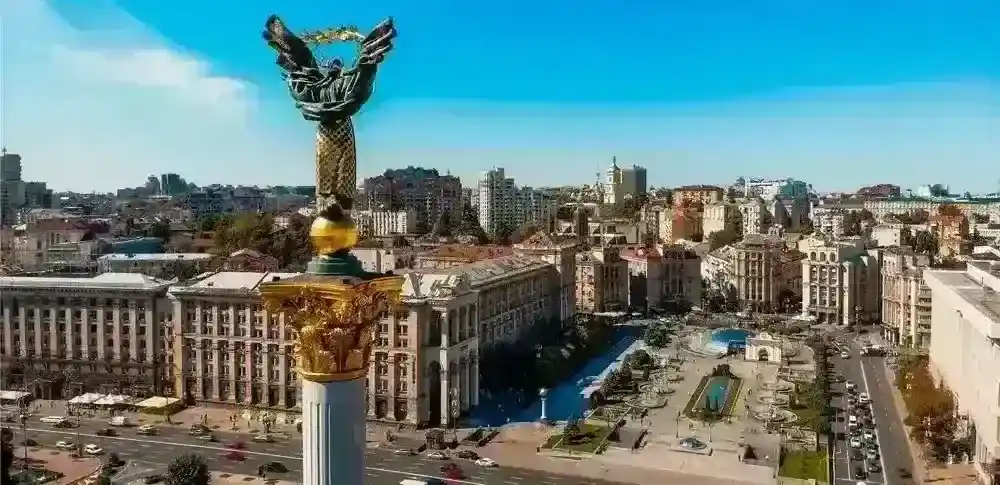
That evening, journalist Mustafa Nayyem urged people on social media to meet on Maidan Nezalezhnosti. Students, activists, opposition supporters, and ordinary Kyiv residents gathered with Ukrainian and European flags; similar demonstrations appeared in other cities.
From EU Agreement to a Larger Struggle
The first crowds were peaceful and the demand was narrow: sign the association agreement. They did not overthrow a government, seize institutions, or call for war with Russia.
Yanukovych left the Vilnius summit without signing on November 29. In the early hours of the next morning, riot police violently cleared the remaining protesters, many of them students.
That decision changed the movement. Anger over a suspended EU agreement became outrage over police violence, corruption, unaccountable power, and the right to protest—beginning Euromaidan and the Revolution of Dignity.

- Condenses centuries of Ukrainian history into an approachable single volume
- Useful context for Kyiv's monuments, museums, and national symbols
- A manageable starting point before moving into more specialized histories
Continue with the next article in the sequence:
Return to the chronological outline to browse all chapters.